
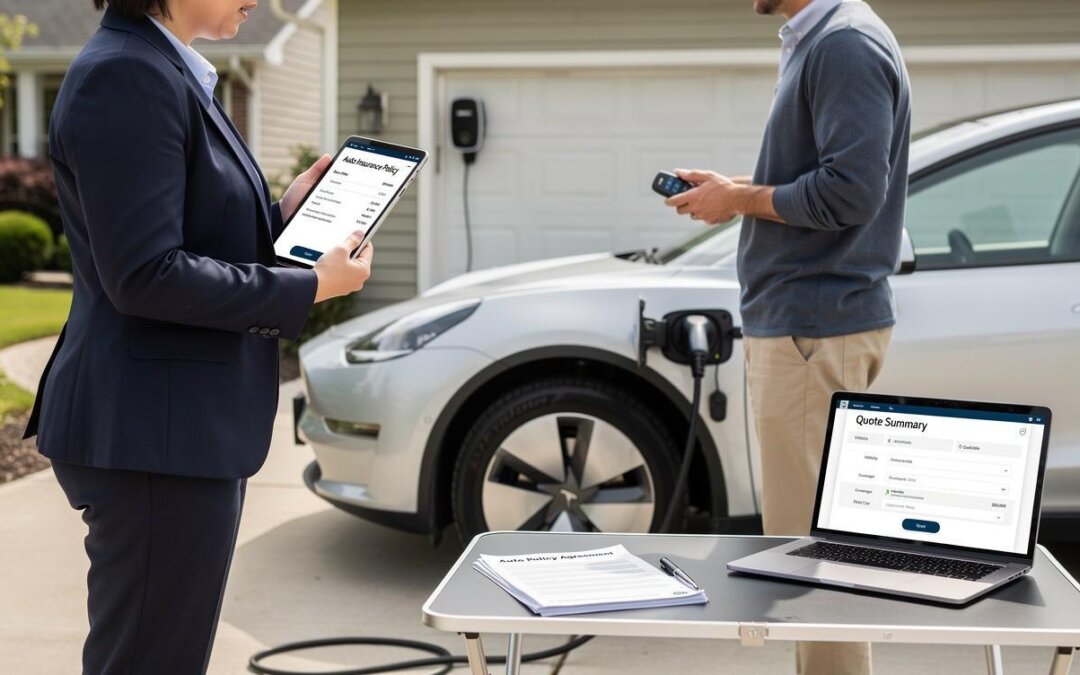
Electric vehicles are becoming more common on Snohomish roads, but standard auto insurance doesn’t cover their unique needs. EV batteries, charging equipment, and specialized repairs require protection that most traditional policies simply don’t offer.
We at Top Insurance Associates, a Trucordia Business, help EV owners in Snohomish find coverage that actually matches their vehicles. This guide walks you through the specific protections your electric vehicle needs.
Why Your EV Costs More to Insure
Electric vehicles operate on fundamentally different mechanical systems than gas-powered cars, and this reality hits your insurance costs hard. An EV battery pack costs between $5,000 and $15,000 to replace, while traditional engine repairs rarely approach that range. Electric motors have fewer moving parts than combustion engines, but when they fail, the repair bill climbs steeply. Snohomish County has only a handful of certified EV repair facilities compared to dozens of conventional auto shops, which means repair labor costs spike due to limited competition and specialized technician availability. Insurance companies factor these expenses into your premiums because they know the financial exposure is real and substantial.
Battery damage claims hit different
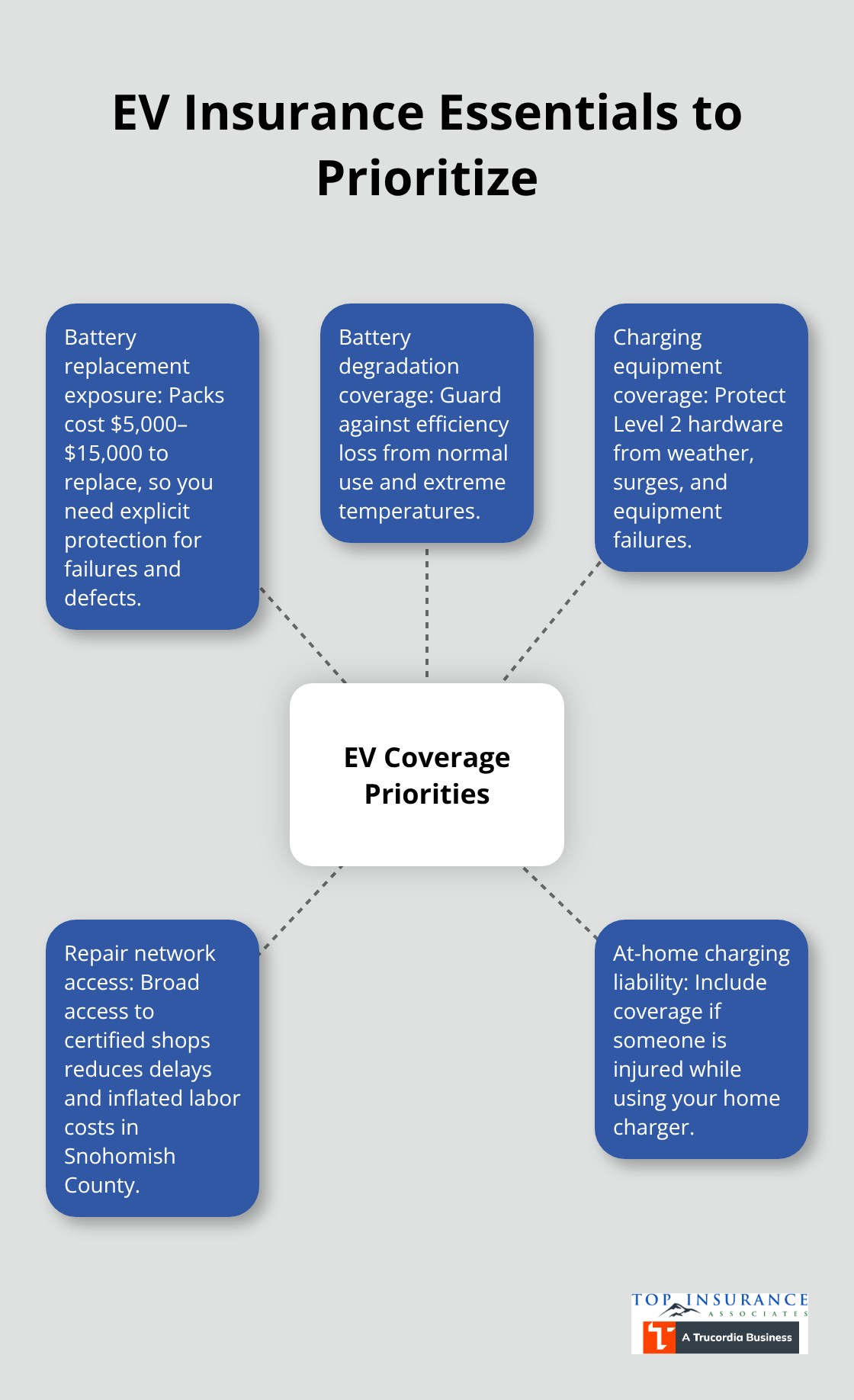
Standard collision and comprehensive coverage won’t adequately protect your EV’s battery from weather-related damage, manufacturing defects, or gradual degradation. Cold winters in Washington state reduce battery efficiency, though standard policies typically don’t cover this degradation. Battery thermal management system failures, water intrusion from flooding, and defects in the battery management software all represent financial risks that traditional auto policies treat as routine damage claims. Your insurer needs to understand that replacing a degraded battery isn’t a repair-it’s a complete system replacement with costs that dwarf conventional powertrain repairs.
Specialized repair networks create geographic challenges
When your EV needs service, finding an authorized repair shop becomes a real problem in Snohomish County. Most independent mechanics lack the diagnostic equipment and training to work on EV powertrains safely, which means you’ll travel to Seattle or Bellevue for repairs covered under your policy. This geographic limitation forces insurance companies to accept higher repair costs because fewer shops can do the work, eliminating price competition. Your policy selection matters significantly here-some carriers restrict coverage to specific repair networks, while others offer broader access to certified facilities across the region.
Coverage Options Specific to Electric Vehicles
Battery protection addresses your largest financial exposure
Your EV’s battery represents the single biggest financial risk your insurance must cover. Battery replacement costs between $5,000 and $15,000, which far exceeds typical engine repairs, yet many standard policies classify battery damage the same way they handle a blown transmission. Electric vehicle maintenance costs are 50% less than gas-powered cars over their lifetime, according to Consumer Reports, though individual repair events can still be expensive. You need explicit battery coverage that addresses not just sudden failure but also gradual degradation from normal use, extreme temperatures, and manufacturing defects. Standard collision and comprehensive coverage won’t adequately protect your battery from weather-related damage, manufacturing defects, or the slow efficiency loss that happens over time.
Charging equipment damage protection matters more than you think
Your home charging station represents a significant investment that standard homeowners policies often exclude. Level 2 chargers cost $500-$2,500 installed, and weather events, electrical surges, or equipment failure can leave you without home charging capability. You’d then rely on public charging networks that may not fit your schedule or location needs. Your EV insurance policy should cover both the charging equipment itself and liability if someone is injured while using your charger.
This protection keeps your charging investment safe and maintains your ability to charge at home without interruption.
Repair shop networks directly impact your wallet and timeline
Snohomish County’s limited EV repair capacity means your insurer’s network determines whether you pay reasonable labor rates or face inflated charges from the only certified facility available. Some carriers restrict coverage to manufacturer-authorized dealerships, which sounds protective but actually limits your options and extends repair timelines because dealership schedules fill months ahead. Others partner with independent shops certified in EV service, offering faster turnaround and competitive pricing. When comparing policies, request a complete list of in-network facilities within a 30-minute drive of your home and workplace-this directly affects your convenience and repair costs when you need service.
The repair network you select today shapes your experience every time your EV needs attention. Your next step involves comparing actual quotes from multiple carriers to see which policies offer the repair access and battery protection that match your specific situation.
How to Compare EV Insurance Quotes in Snohomish
Request identical information across all carriers
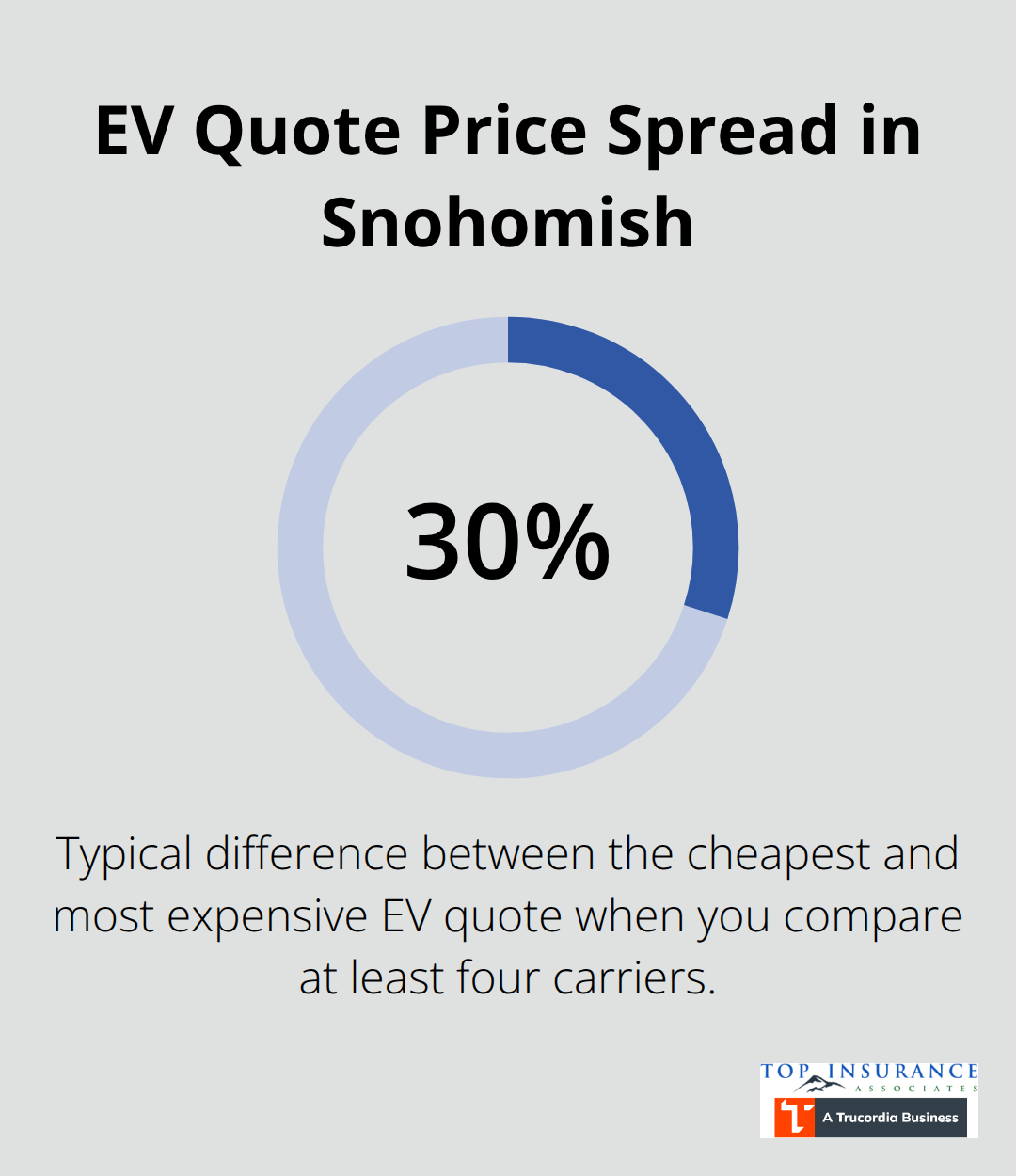
Accurate quotes from multiple carriers reveal massive price differences that most drivers miss. When you request quotes, provide identical information across all carriers-vehicle make and model, battery capacity, annual mileage, and your specific coverage needs for battery protection and charging equipment. EV-focused insurers and traditional companies like State Farm, Geico, and USAA price policies differently based on their EV experience and risk models. Request quotes from at least four carriers because the difference between the cheapest and most expensive option typically exceeds 30 percent for EV coverage. Many drivers stop at two quotes and miss substantial savings.
Look beyond the base premium
Don’t focus solely on the base premium when comparing policies. Examine what each policy actually covers regarding battery degradation, charging equipment damage, and which repair shops fall within their network. A lower premium that restricts you to a dealership 45 minutes away costs more in reality than a slightly higher premium with access to certified shops nearby. The true cost of your policy includes repair convenience and coverage scope, not just the monthly payment.
Identify EV-specific discounts in Washington
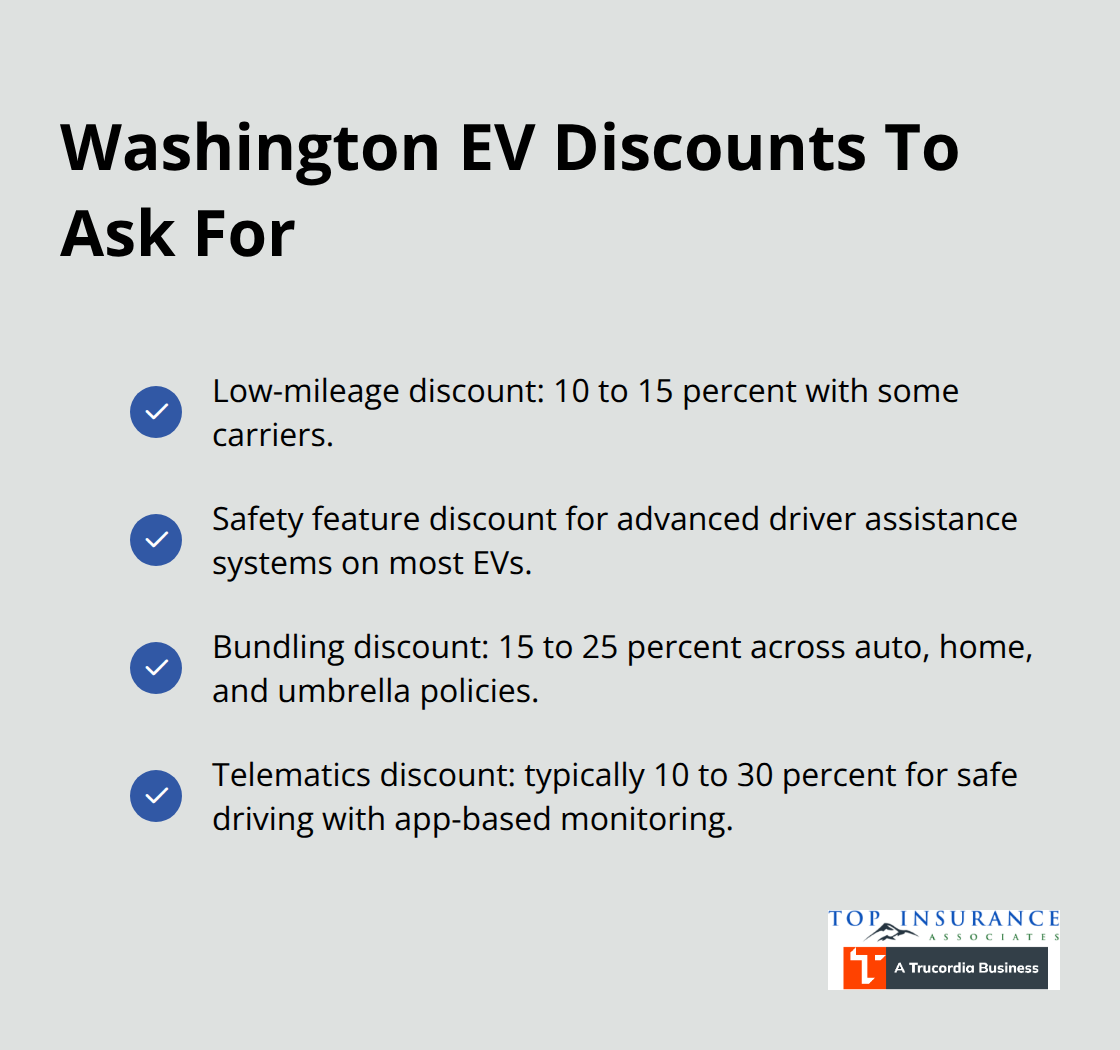
EV owners in Washington qualify for specific discounts that significantly reduce premiums, yet most policies don’t automatically apply them. Low-mileage discounts apply strongly to EV owners who rely on home charging and drive less than 10,000 miles annually-Nationwide and Progressive both offer 10 to 15 percent reductions for this usage pattern. Safety feature discounts reward the advanced driver assistance systems standard on most EVs, which reduces collision claims. Bundling your EV insurance with home and umbrella policies typically saves 15 to 25 percent across all three policies (making this strategy particularly valuable for homeowners).
Use telematics programs strategically
Some carriers offer telematics discounts where they monitor your driving habits through a mobile app, typically saving 10 to 30 percent if you maintain safe driving patterns. This approach works well for drivers confident in their habits but requires you to accept real-time monitoring. Evaluate whether the discount justifies sharing your driving data before you enroll in a telematics program.
Work with an agent who knows multiple carriers
An independent insurance agent working with multiple carriers knows which companies offer the most generous EV discounts and can structure your coverage to maximize savings without sacrificing the protection your battery and charging equipment actually need. Top Insurance Associates, a Trucordia Business, helps you identify which discounts apply to your specific situation and ensures your policy reflects all eligible savings.
Final Thoughts
Electric vehicle insurance in Snohomish demands a different strategy than traditional auto coverage because your battery represents massive financial exposure, repair shops remain scarce enough to inflate labor costs, and charging equipment sits unprotected under most homeowners policies. The three decisions that matter most are selecting explicit battery degradation coverage, verifying repair shop access within reasonable driving distance, and capturing every EV-specific discount available in Washington state. Most EV owners leave money on the table by accepting the first quote they receive, yet comparing policies across at least four carriers typically reveals 30 percent price differences.
Low-mileage discounts, safety feature discounts, and telematics programs each offer substantial savings if your driving patterns qualify, while bundling your EV insurance with home and umbrella coverage can save 15 to 25 percent across all policies. The real cost of your policy includes repair convenience and coverage scope, not just the monthly premium. Your battery, charging equipment, and access to qualified repair facilities all factor into what you actually pay when you need service.
Contact Top Insurance Associates to discuss your EV’s specific protection needs and receive quotes from carriers that understand electric vehicle risks in Snohomish. We’ll review your current coverage, identify gaps, and structure a policy that protects what matters without overpaying for protection you don’t need. As an independent agency in Everett, we work with numerous insurers to find the right fit for your situation.
Disclaimer: The information provided in this blog is for general informational purposes only and does not constitute legal, financial, or insurance advice. Coverage options, terms, and availability may vary. Please consult with a licensed professional for advice specific to your situation. Artificial intelligence may have been used to generate text and images in some blog articles.